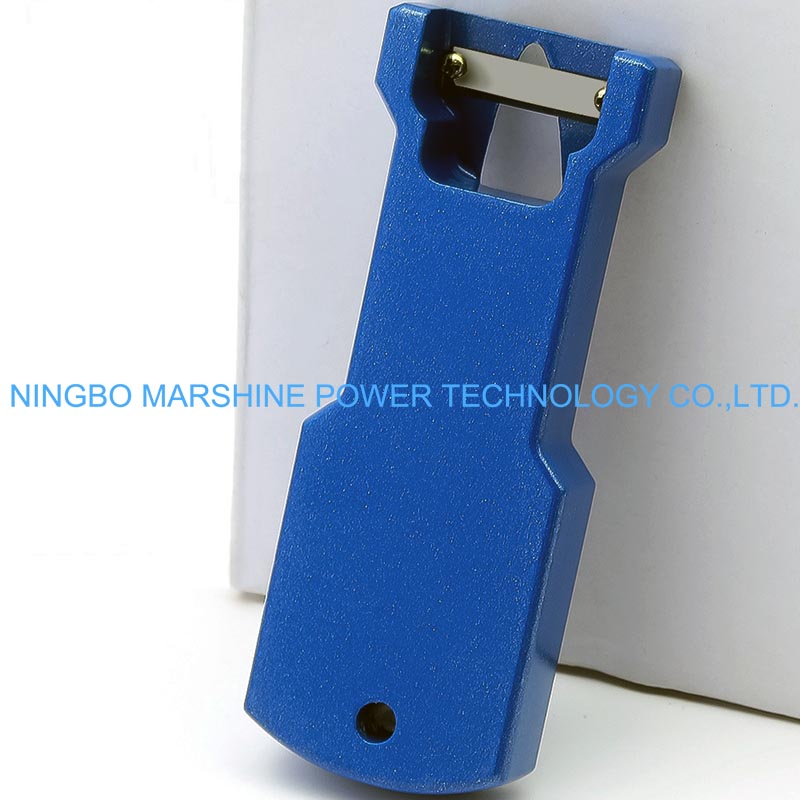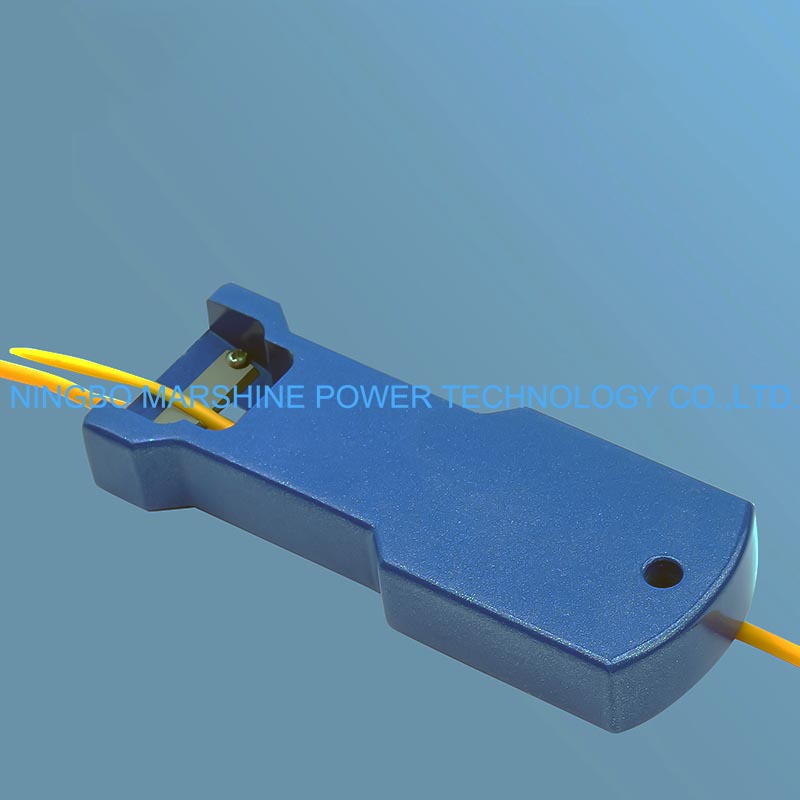
What Is a Longitudinal Cable Stripping Cutter?
In fiber optic cable installation and maintenance, precision and care are critical. Damaging the inner fibers during jacket removal can result in signal loss, costly repairs, and project delays. And our MARSHINE Aluminum Alloy Optical Fiber Longitudinal Cable Stripping Cutter is specially designed to perform clean, controlled longitudinal cuts on fiber optic cable jackets—without harming the internal fibers. Been featured with a durable aluminum alloy body, adjustable blade depth, and ergonomic design for professional field use.
Features
A longitudinal cable stripping cutter is a precision tool used to:
Slit the outer sheath of fiber optic cables lengthwise;
Remove protective jackets without damaging internal buffer tubes;
Prepare cables for splicing, termination, or branching.
High-Strength Aluminum Alloy Body:Lightweight yet durable;
Adjustable Blade Depth:Suitable for various cable diameters;
Precision Cutting Blade:Clean, accurate longitudinal cuts;
Ergonomic Grip Design:Comfortable operation during extended use;
Compact and Portable:Ideal for field technicians;
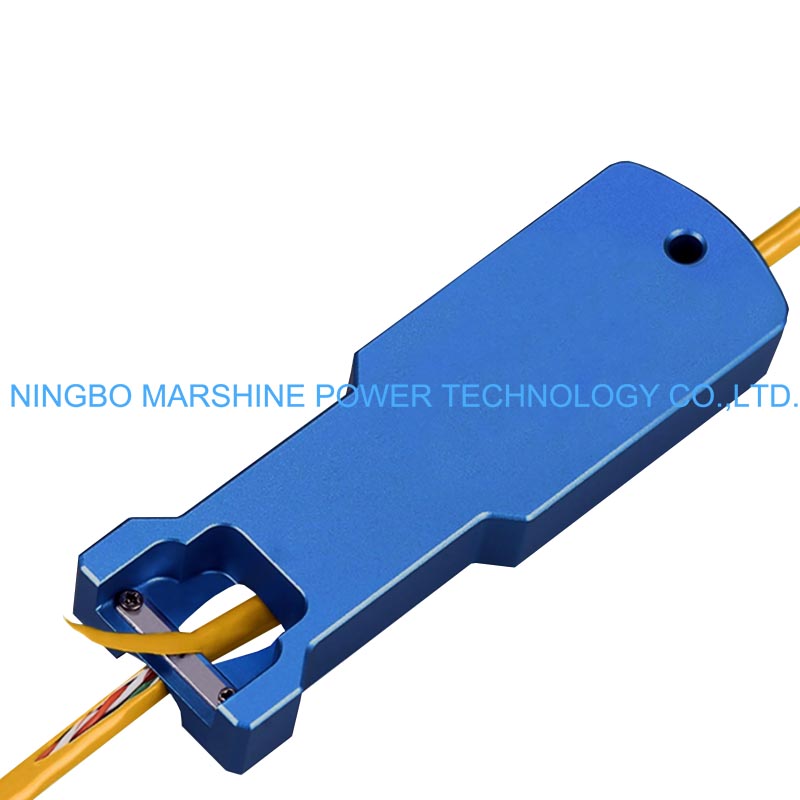
So How To Use MARSHINE Longitudinal Cable Stripping Cutter?
First, measure and mark the length to be cut by evaluating how much of the cable sheath you want to remove and mark with a pen on clearly the start and end position.
Next, set the blade depth of the blade according to the thickness of the cable jacket:
Not deep enough the jacket will not be cut thoroughly;
Too deep can cut buffer tubes or fibers accidentally;
So you can make a small test cut at this point.
Then, just place your MARSHINE Aluminum Alloy Optical Fiber Longitudinal Cable Stripping Cutter onto the cable while make sure the cable is securely held in the V-groove. Line the blade up with the start line, and grip the cable to make sure it doesn't move.
After that, apply light and even pressure and run the cutter along the length of the cable, just go right down straight and smoothly. Please do not push too hard while ensuring tool can stays aligned during movement to protect the fiber cable.
Now strip off the cable jacket, and when the incision is finished, you should carefully detach and peel off the outer skin to look for the damage to the internal buffer tubes. If the cut is clean, the sheath can be pried open naturally without breaking one fiber.
Finally as soon as it is stripped, please examine the fibers for scratches, compression, and clean the exposed area if necessary to proceed to prep for splicing/termination.