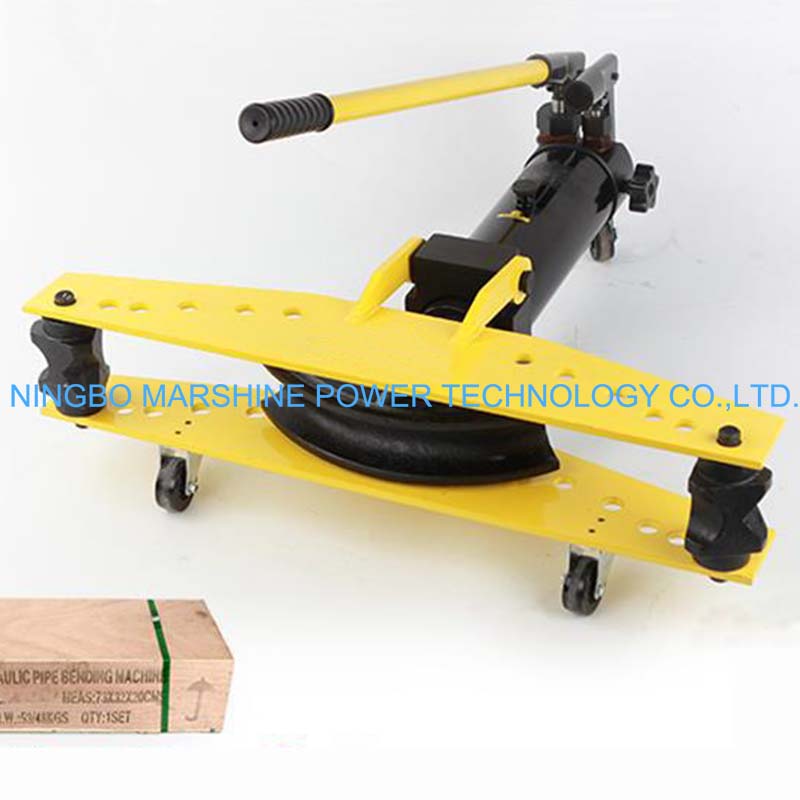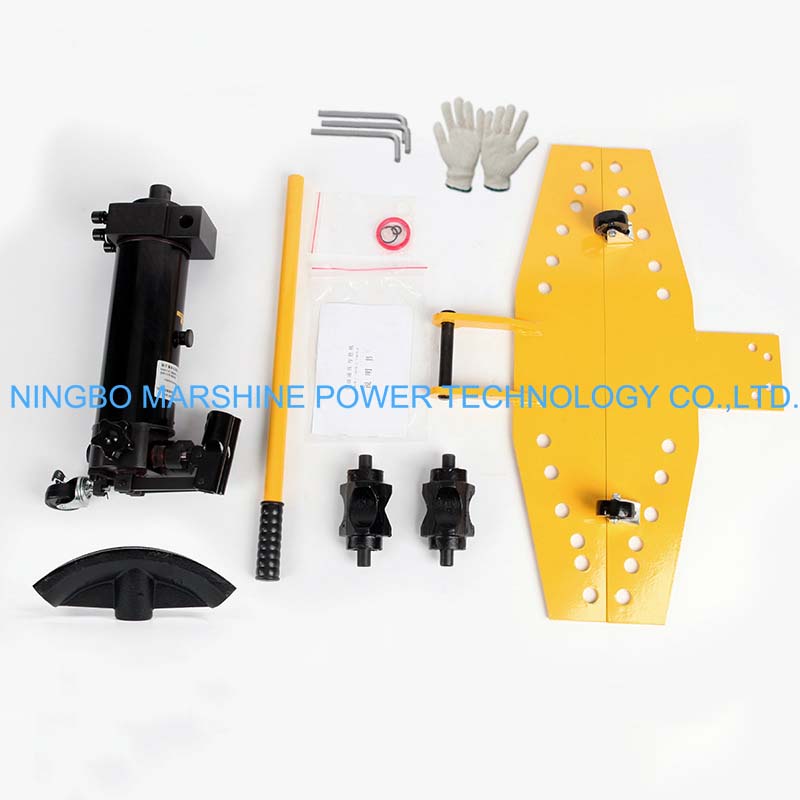
What’s The MARSHINE SWG Small Type Manual Operated Hydraulic Pipe Bending Machine?
A manual hydraulic pipe bending machine uses hydraulic pressure to bend metal pipes smoothly and accurately. Compared with traditional manual bending tools, hydraulic bending machines can offer higher bending force, improved bending accuracy, better protection for pipes, and the reduced physical efforts. Pipe bending is a common task in electrical installation, construction, and industrial maintenance. To achieve accurate bends without damaging the pipe in nowadays electric power constructions, a reliable bending tool is essential. The MARSHINE SWG Small Type Manual Operated Hydraulic Pipe Bending Machine is designed to provide precise and efficient pipe bending through a compact hydraulic system.
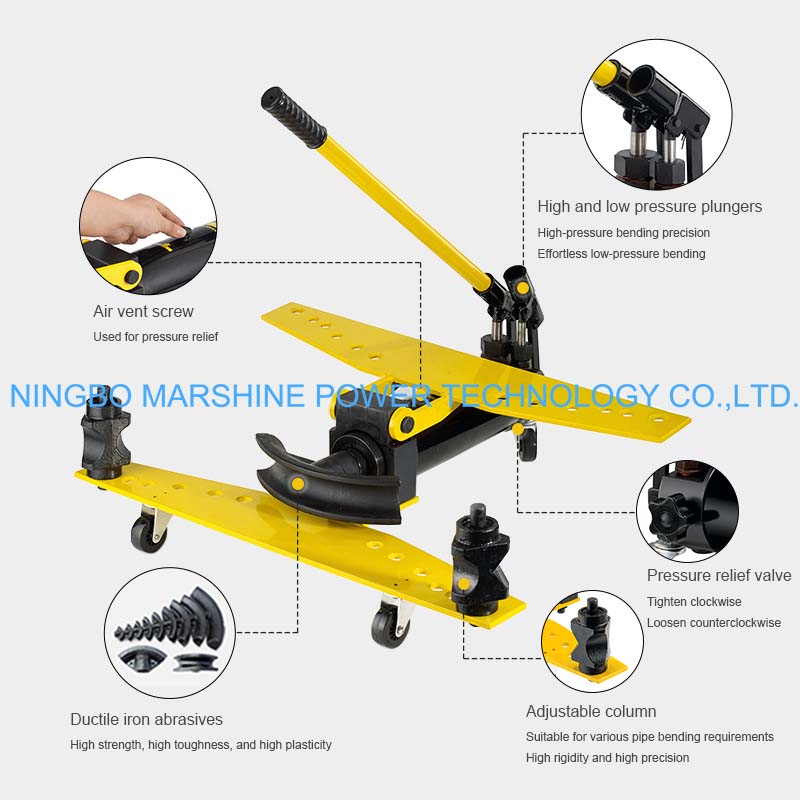
So How Can I Use MARSHINE Small Type Manual Hydraulic Pipe Bending Machine Properly?
Choose the Right Bender Die
Select the bending die equal to the diameter of the pipe.
Inspect the size of pipe.
Place the appropriate bending die onto the unit.
Make sure the die is seated tightly in the bender frame.
The right die for the job provides for consistent, accurate bends and over bending will not result in pipe deformation.
Position the Pipe
Take the pipe you want to bend and place it between the three rollers and the bending die in the center.
Place the pipe on the bending die.
Make sure the pipe rests evenly in the die.
Draw the bend start position with the help of the marker.
Alignment is everything if you want to get the right bend angles.
Secure the Tube or Pipework
Clamp down the pipework and then with both hands just grip the electrified saw as if you were going to chop with both hands.
Make sure that pipe is stable in the bending frame.
Verify that both ends of the pipe have adequate support.
This will keeps the pipe from walking while you're bending it.
Use the Hydraulic Pump
Drape the pipe on the edge of a step.
Bend the pipe with the handle our your MARSHINE SWG Small Type Manual Operated Hydraulic Pipe Bending Machine.
Slowly pump hydraulic handle down.
The bending die will be pushed up by the hydraulic cylinder.
The pipe will, little by little, wrap around the die.
In order to prevent jarring application of pressure and instantaneous collapsing, press with mild and harvested force.
Monitor the Bending Angle
Stop pumping at the desired bending angle.90°.
Common bending angles include:
30°
45°
60°
90°
If you need an exact angle, using a protractor or an angle gauge is highly recommended.
Release Hydraulic Pressure
Once the bend has been made:
Please slowly release the hydraulic valve.
The bending shoe will return to its original position.
Carefully remove the bent pipe from the machine.
This is to avoid releasing pressure too quickly.