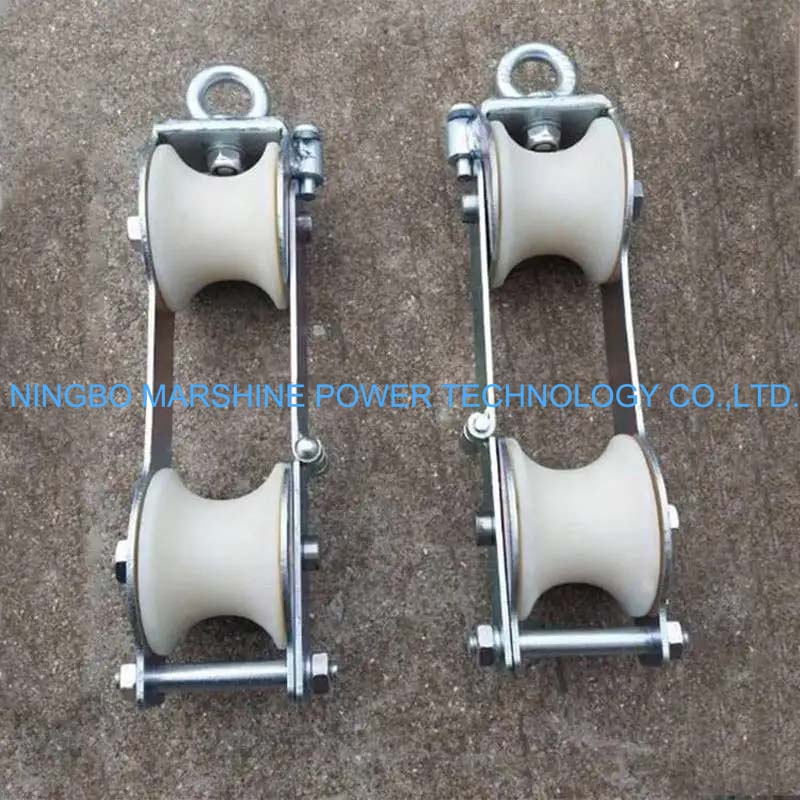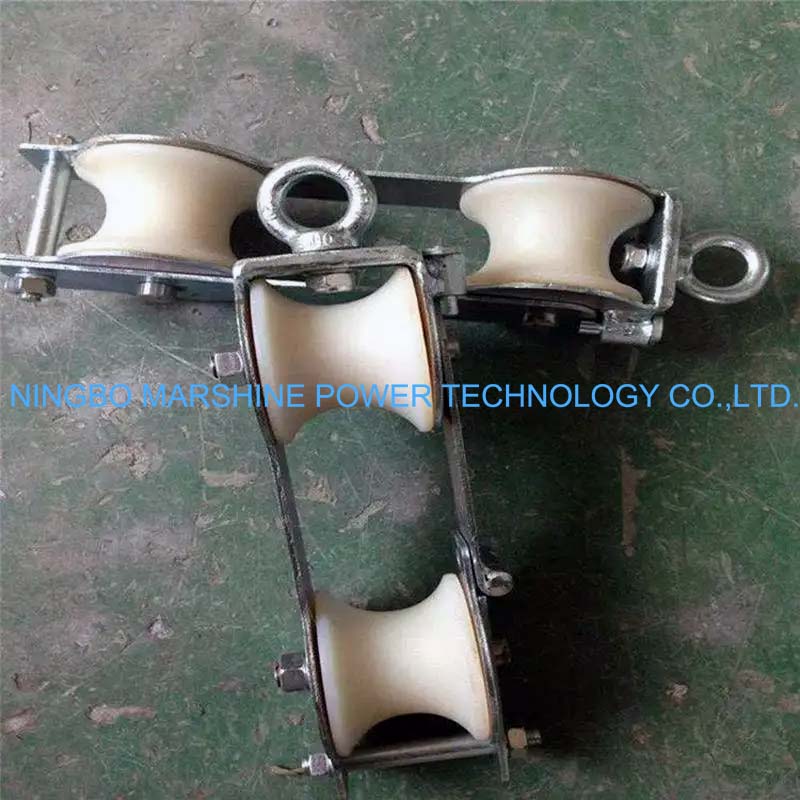
What Is MARSHINE Two-Wheeled OPGW Cable Stringing Pulley?
The MARSHINE ZF011203 Two-Wheeled Eyeglass-Shaped OPGW Cable Stringing Pulley is a professional tool for OPGW installation for overhead line projects. The unique “eyeglass-shaped” dual-wheel design provides superior cable stability and load balancing with a substantial reduction of friction while stringing. This protects the fragile fiber optic cores while enhancing productivity and safety in the field.
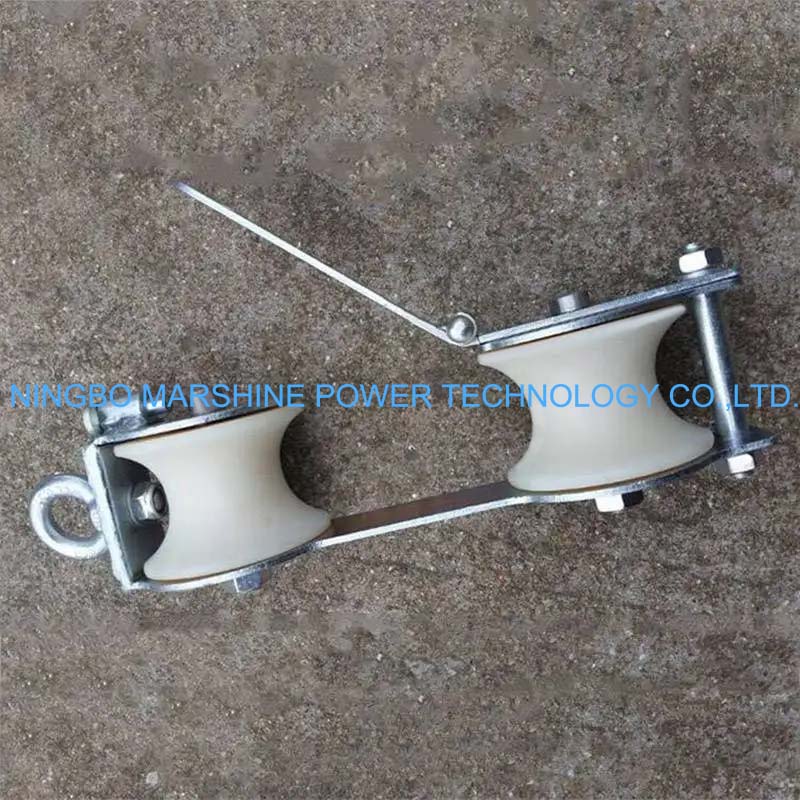
So How To Use MARSHINE OPGW Cable Stringing Pulley Properly?
Preparation Before Use
Good preparation makes for safe and efficient operation:
Examine The Pulley
test if each wheel rotates smoothly and there is no crack, deformation, or dust.
Check Compatibility
The size of the groove has to be equal to the diameter of the OPGW cable.
Inspect The Mounting Hardware
Make sure all clamps, brackets and bolts are tight.
Route The Installation
locate all the hardware within reach along the cable run.
Use Safety Gear
Helmets, gloves and fall protection equipment.
Installing the Pulley
Choose a Mounting Spot
Attach the MARSHINE ZF011203 Two-Wheeled Eyeglass-Shaped OPGW Cable Stringing Pulley to the suspension points (towers, poles, cross-arms).
Be sure to line up with the cable path to prevent needless bending.
Secure the Pulley
Fasten the pulley securely with screws or brackets.
Tighten all hardware for a rigid assembly when in use.
Line Up the Dual Wheels
Make sure so the two wheels are lined up with the cable run.
This alignment stops the cable from being twisted and unevenly worn.
Running the OPGW Cable
After the installation is finished:
Raise the cable
With a cable drum stand or hoist, bring the OPGW cable to the pulley.
Insert the cable in to the pulley
Make sure that the cable is well positioned inside the groove between the two wheels.
Begin the pull cable
Winch or tension on the cable to pull the line through the block system.
Keep steady tension
Pull with a steady force, so that there is no sudden stress on the fiber core.
Watch the movement
Watch the cable as it travels through the plate to make sure it is not catching or abrading.
Modify as needed
Stop and reorient if you notice any unusual motion or chafing.