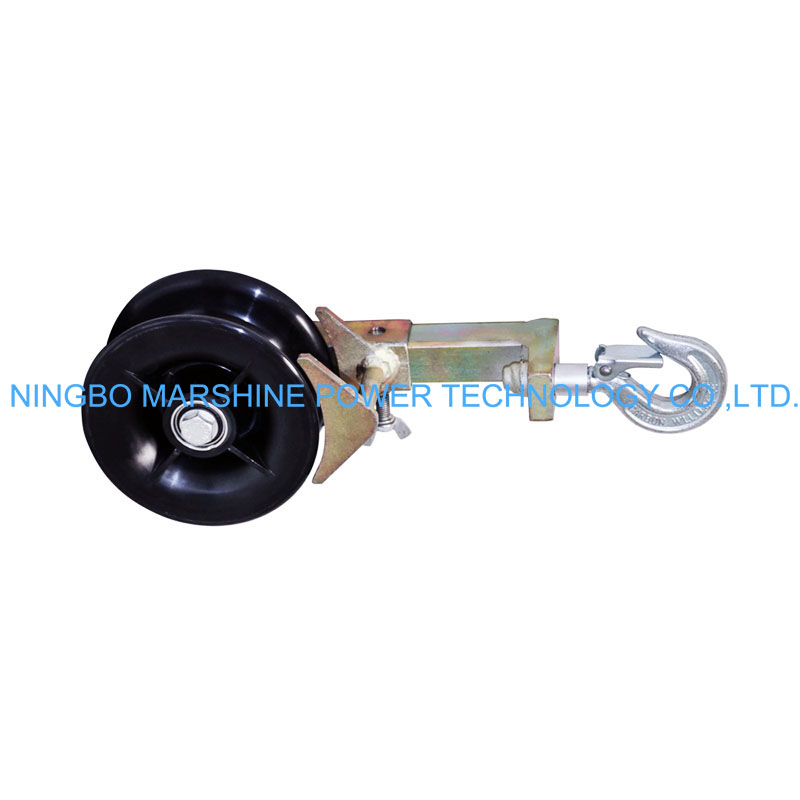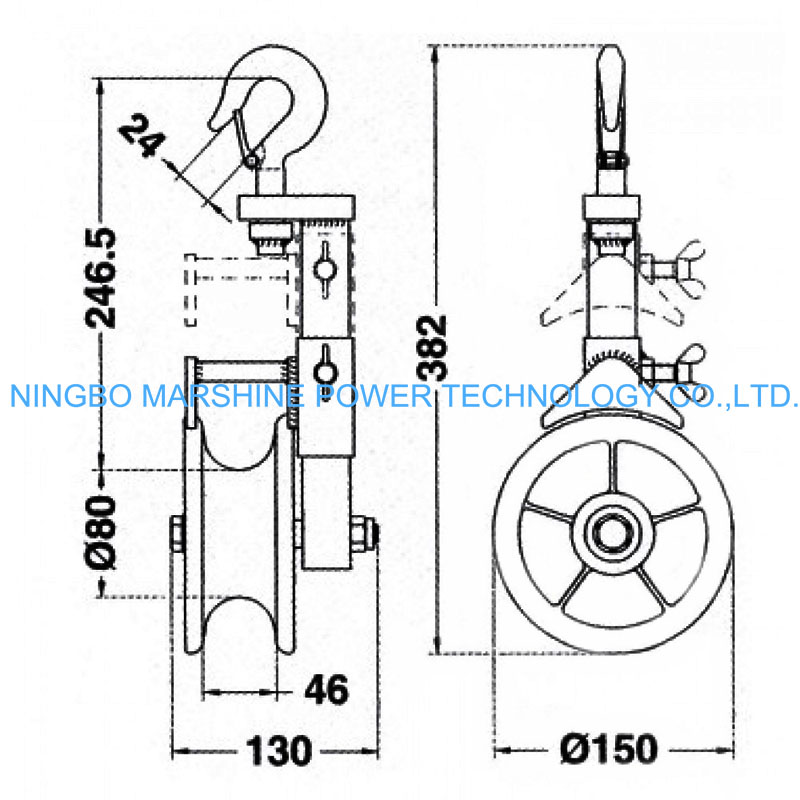
What Is MARSHINE Hook Type LV Cable Mounting Roller?
The MARSHINE Hook Type LV Cable Mounting Roller Uninsulated Conductors Stringing Pulley is a functional yet high-quality cable mounting tool for LV cables or uninsulated conductors guide during overhead stranding. With a handy hook-type mounting system, this roller can be easily hung from poles, cross-arms or other surfaces for immediate setup and runs cable smoothly. It reduces friction, minimize conductor damage and increases the efficiency of the installation.
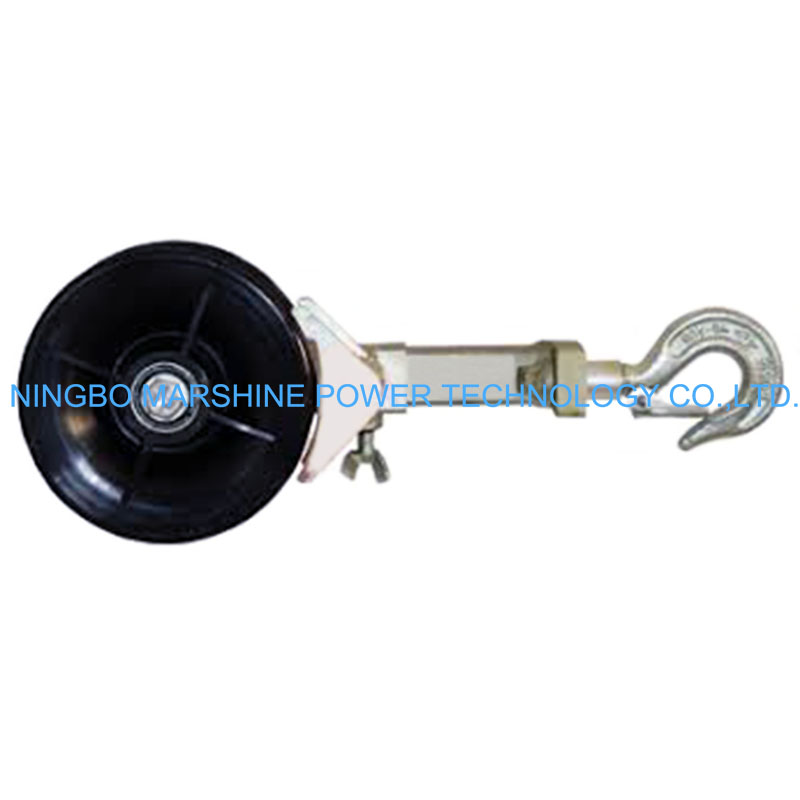
So How To Use MARSHINE Hook Type LV Cable Stringing Pulley Properly?
Preparation
Before you begin, please make sure you have everything you need:
Examine the roller roller
Look for cracks, warping, and debris. Make sure the roller rolls freely.
Check the size compatibility
Make sure the groove size is equal to the diameter of your conductor.
Test the hook mechanism
The hook must be strong, reliable and undamaged.
Cable route planning
Determine anchor points and check path line.
Also do not forget to wear PPE when working aloft.
Installing the Roller
Determine the Mounting Location
Select a pole, cross-arm or support from which to hang along the cable run.
Make sure the position is equal to the conductor path for a smooth moving.
Attach the Hook
Hang your MARSHINE Hook Type LV Cable Mounting Roller Uninsulated Conductors Stringing Pulley with the hook on the selected rig/hardware firmly.
Make sure the hook is fully seated and can’t slip or come off.
Check Alignment
Move the roller so that it is directly in line with the rollers to the left and right.
Correct alignment reduces friction and guards against conductor running off.
Running the Cable
Once the roller is installed:
Lift the conductor
Lift the conductor with suitable lifting tools or by hand to the roller.
Put into the roller groove
Check that the conductor is properly positioned in the groove without being twisted.
Begin the pull
Pull the conductor through the roller by winching or hand pulling.
Keep Tension Uniform
A uniform traction is essential to avoid jerk or sudden stress.
Observe motion
Make sure the conductor glides and is not caught or slips.