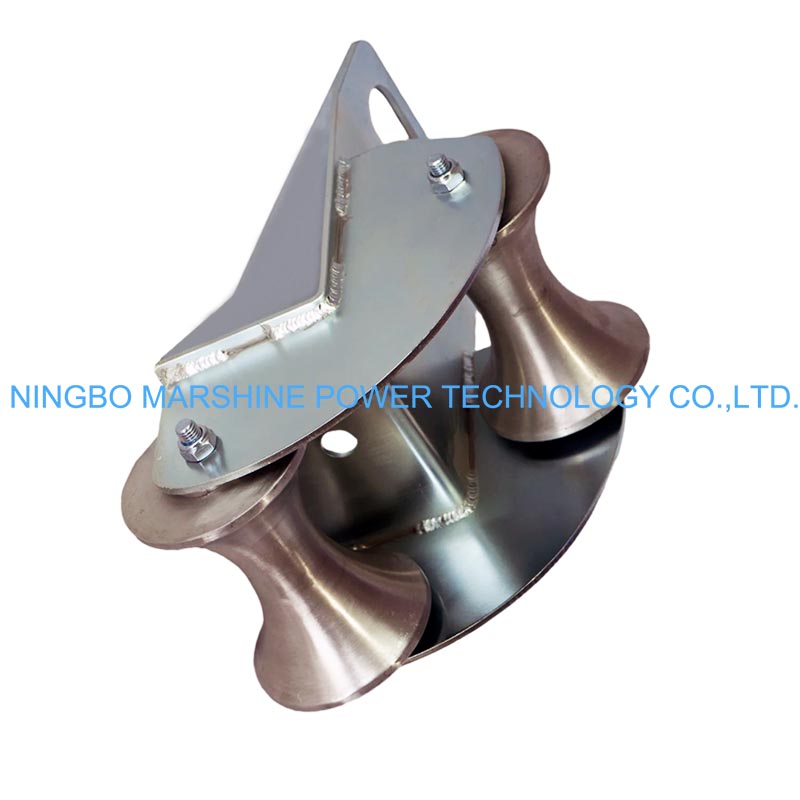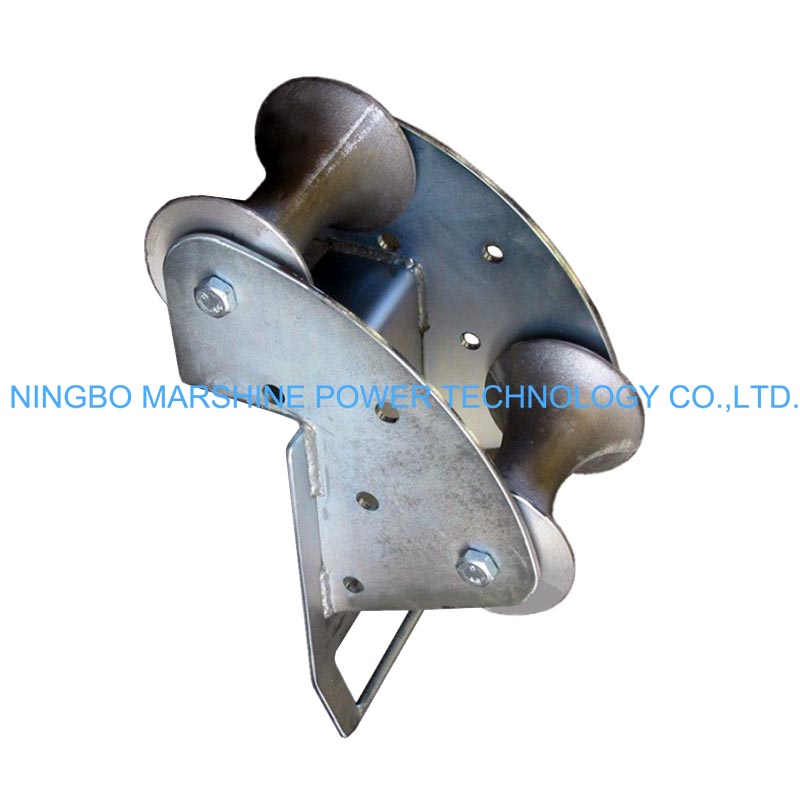
The MARSHINE Twin Roller Guide For Manhole MARTRG-140/2 is a practical example of this type of equipment. Designed with a twin-roller configuration, it sits on the manhole edge and guides cables safely during pulling operations, reducing friction and minimizing the risk of cable damage. Similar twin-roller manhole guides are specifically designed to guide cables over manhole edges and assist cable entry during underground installations.
So What Is a Manhole Guide Roller?
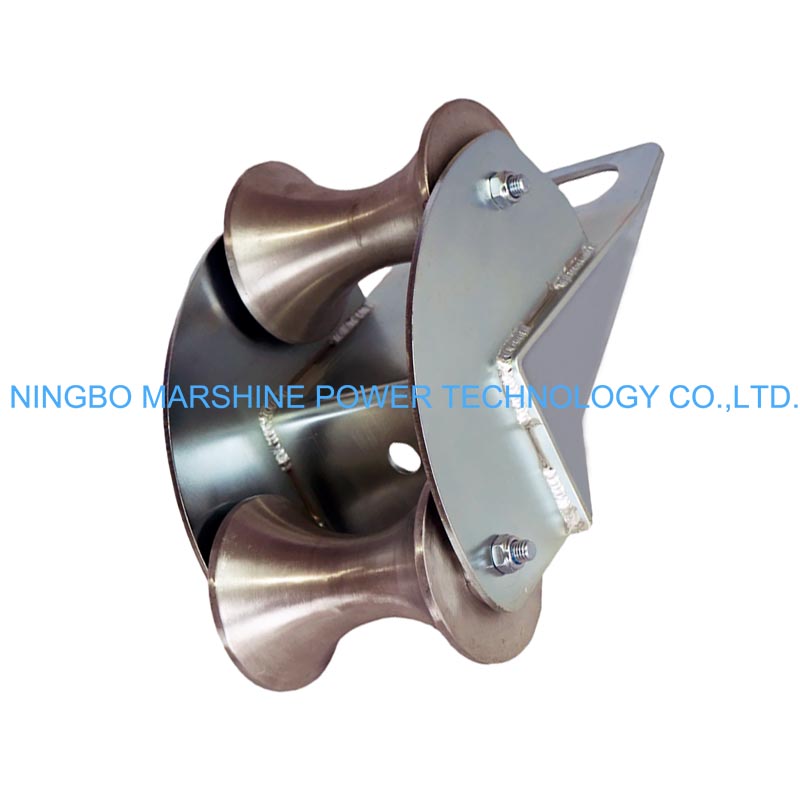
A manhole guide roller is a cable-directing mechanism placed on the edge of manhole, pit, underground chamber, etc. The main function is to hold and guide the cable entering or leaving the manhole with an appropriate bend radius and minimize the friction between the cable and the surface. MARSHINE Twin Roller Guide For Manhole MARTRG-140/2 have two durable rollers, which is to ensure a smooth cable path and better support to the cable while pulling. Twin-roller manhole guides are usually mounted on the edge of the manhole for corner pulls, and cable entries.
What About The Benefits For Constructions?
Shield Cable Jackets from Harm
One of the most significant benefits to a manhole guide roller is cable protection.Without a roller, cables might be rubbing against the concrete manhole edges, steel covers and frames, rough surfaces of construction and abrupt changes in direction while such contacts may result in: scratches; abrasion; deformed jackets; harmed insulation.
Reduces Pulling Friction
Friction is one of the primary causes of excessive pulling tension during cable installation. The twin-roller design of manhole guide roller like our MARSHINE Twin Roller Guide For Manhole MARTRG-140/2 allows the cable to roll smoothly instead of sliding over a fixed surface. By minimizing friction, contractors can complete installations more quickly and with less mechanical strain on both cables and equipment.
Improves Cable Pulling Efficiency
The manhole guide roller can helps maintain a consistent cable path during installation to provides better cable control, faster cable deployment, reduced installation interruptions and improved crew productivity. When pulling long lengths of power cable, communication cable, or fiber optic cable, even small reductions in friction can significantly improve overall project efficiency.