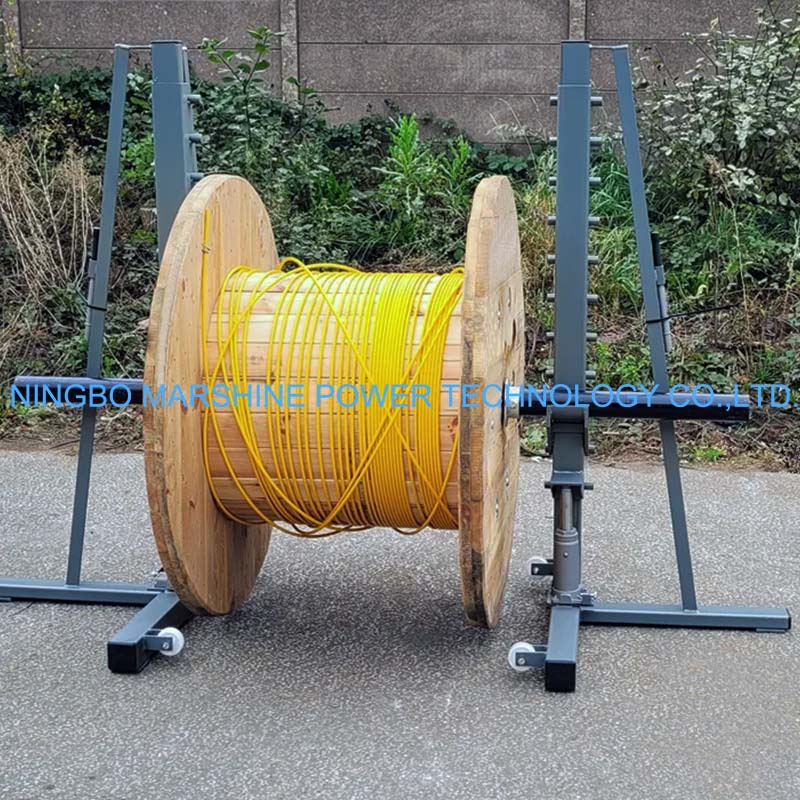
What Are Hydraulic Drum Jacks?
Hydraulic drum jacks are portable lifting devices used in pairs to support both ends of a spindle bar inserted through a cable drum. Unlike mechanical screw jacks, hydraulic drum jacks use hydraulic cylinders to lift the drum with minimal operator effort. The MARSHINE MARHDJ Series Galvanized Steel Hydraulic Drum Jacks are designed to simplify these operations. Using a hydraulic lifting system, they enable operators to raise heavy cable drums smoothly and securely, allowing cables to be dispensed efficiently during installation. Their galvanized steel construction also provides excellent corrosion resistance, making them suitable for both indoor and outdoor construction environments.
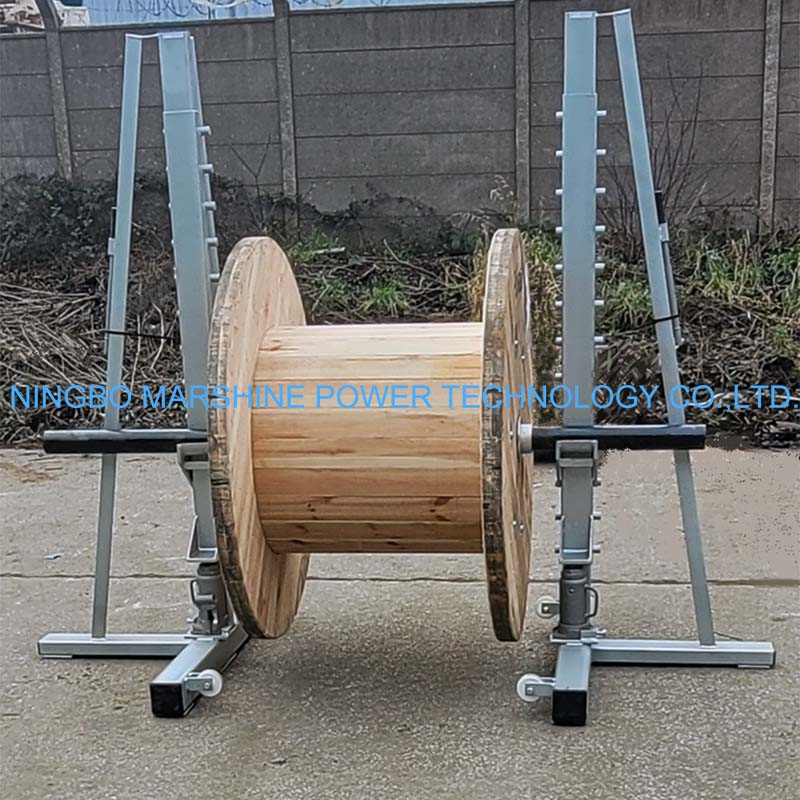
So How To Correctly Use The MARSHINE Hydraulic Jacks?
Before Use
Inspect the Hydraulic Drum Jacks
Before each use, check:
Hydraulic cylinders for oil leaks;
Frame for cracks or deformation;
Support cups for wear;
Hydraulic hoses and fittings;
Wheels and locking devices;
Hydraulic oil level;
Do not use equipment that shows signs of damage or leakage.
Inspect the Cable Drum
Verify that:
The drum is structurally sound.
The center bore is free from obstructions.
The drum weight is within the rated capacity of the hydraulic jacks.
The cable is properly secured before lifting.
Select the Correct Spindle Bar
Choose a spindle bar that matches:
Drum width;
Drum bore diameter;
Cable drum weight;
Jack capacity;
Secure the spindle using the correct locking collars from your MARSHINE MARHDJ Series Galvanized Steel Hydraulic Drum Jacks to prevent sideways movement during operation.
Position the Cable Drum
Place the cable drum on firm, level ground and ensure there is sufficient working space around the drum for lifting and cable installation. The cable payout direction should already be planned before lifting begins.
Insert the Spindle Bar
Insert the spindle bar completely through the center of the cable drum.
The spindle should extend evenly beyond both sides of the drum.
Install locking collars on both sides to keep the drum centered.
Position the Hydraulic Drum Jacks
Move one hydraulic jack beneath each end of the spindle bar.
Ensure that:
Both jacks are positioned symmetrically.
The spindle rests securely inside both support cups.
The bases sit firmly on level ground.
Proper alignment helps ensure stable lifting.
Raise the Cable Drum
Operate the hydraulic pump according to the model instructions.
Raise both hydraulic jacks gradually and evenly.
Avoid lifting one side significantly higher than the other.
Continue lifting until:
The cable drum clears the ground.
The drum rotates freely.
The spindle remains level.
Do not exceed the rated lifting height of the hydraulic jacks.
Check Stability
Before beginning cable installation, verify that:
Both hydraulic jacks remain stable.
The spindle is level.
The drum rotates smoothly.
Locking collars remain secure.
No hydraulic oil leaks are visible.
If any instability is detected, lower the drum and correct the setup before proceeding.
Begin Cable Installation
Once the drum has been securely lifted:
Start pulling the cable slowly.
Maintain a steady pulling speed.
Monitor drum rotation continuously.
Prevent sudden acceleration or abrupt stops.
The drum should rotate smoothly throughout the installation process, allowing the cable to unwind evenly.
Monitor During Operation
Throughout cable installation, periodically inspect:
Hydraulic cylinder stability
Drum alignment
Spindle position
Hydraulic pressure
Ground conditions
Cable payout direction
Stop work immediately if abnormal movement or equipment damage is observed.
Lower the Drum After Installation
After the cable has been completely dispensed:
Release the hydraulic pressure slowly.
Lower both jacks evenly.
Allow the drum to rest securely on the ground.
Remove the locking collars.
Withdraw the spindle bar.
Move the hydraulic jacks away from the work area.
Never release hydraulic pressure suddenly, as this may cause uncontrolled drum movement.