

Understanding the Working Principle
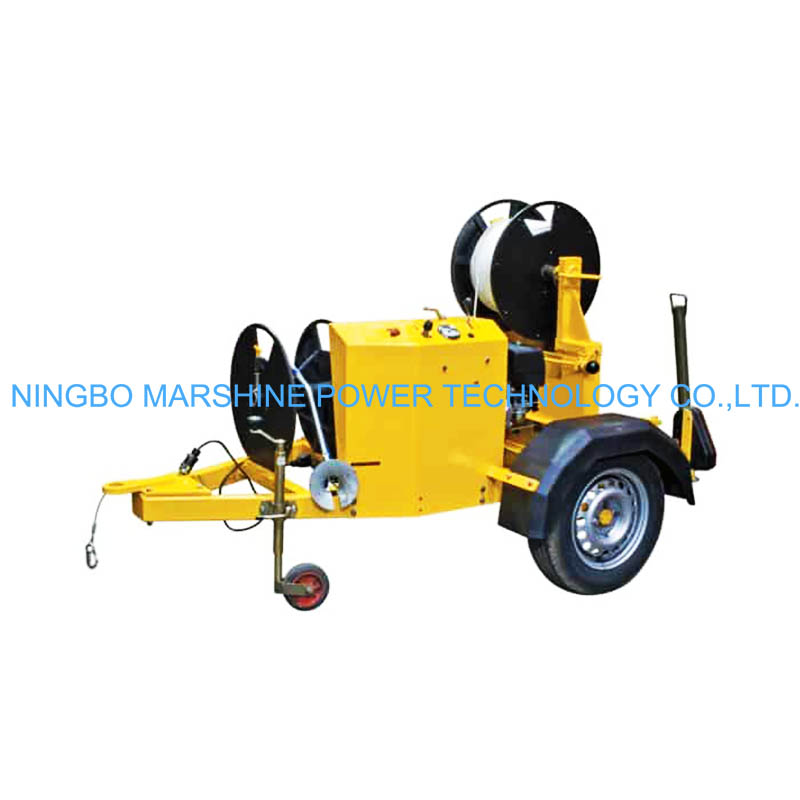
The MARSHINE ABC Cable Pulling Winch uses a hydraulic transmission system to apply pulling force through a pair of vertically arranged bull wheels. This system provides smooth cable installation while reducing conductor damage caused by sudden load changes.
During operation:
The pulling rope wraps around the hydraulic bull wheels.
Hydraulic power transfers controlled pulling force to the rope.
The rope is automatically wound onto the rope drum by a layering arm.
Pulling force remains constant while the operator adjusts the pulling speed.
Built-in overload protection helps prevent excessive tension on the conductor.
Main Components
Before operation, become familiar with the major components.
Hydraulic Double Bull Wheels
The bull wheels provide the primary pulling force and maintain constant traction on the pulling rope.
Rope Drum
The rope drum automatically stores the pulling rope during operation, keeping it neatly wound through a layering mechanism.
Hydraulic Control System
The hydraulic controls allow the operator to:
Adjust pulling speed
Set the maximum pulling force
Select pulling direction
Stop the machine immediately when necessary
Gasoline Engine
The winch is powered by a reliable four-stroke gasoline engine with recoil start, providing consistent hydraulic power in field conditions.
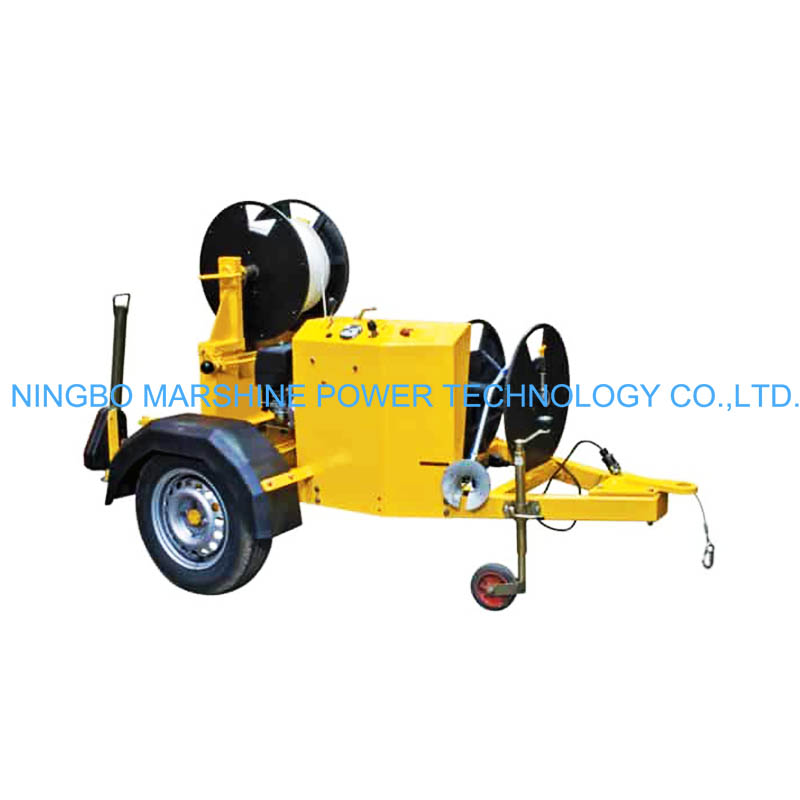
Trailer Chassis
The trailer-mounted frame includes:
Road suspension.
Road-legal lighting.
Stabilizing anchorage legs.
Road wheels for convenient transportation between job-sites.
So How To Use MARSHINE Hydraulic ABC Cable Winch?
Inspect the Machine
Before every operation, perform a complete inspection.
You need to check:
Hydraulic oil level;
Fuel level;
Engine condition;
Bull wheel surfaces;
Rope drum;
Pulling rope;
Hydraulic hoses;
Emergency stop function;
Fasteners and frame;
Any damaged components should be repaired before use.
Position the Winch
Transport the trailer to the work location.
Select a position that provides:
Firm, level ground;
Straight pulling alignment;
Adequate working space;
Safe operator access;
Once positioned:
Lower the anchorage legs.
Secure the trailer against movement.
Ensure the chassis remains stable throughout operation.
Proper anchoring is essential for maintaining accurate pulling force.
Prepare the Pulling Rope
The MARSHINE 10KN Trailer Mounted Hydraulic Gasoline Powered ABC Cable Pulling Winch Machine is supplied with a rope drum containing approximately 400 meters of pulling rope.
Before pulling:
Inspect the rope for wear or damage.
Route the rope around the bull wheels following the recommended wrap pattern.
Connect the rope securely to the pulling grip or swivel.
Confirm all connections are properly secured.
Proper rope routing ensures maximum traction.
Start the Engine
Start the gasoline engine according to the manufacturer's procedure.
Allow the engine to idle for several minutes while:
Hydraulic pressure stabilizes.
Oil circulates through the system.
Controls are checked for proper operation.
Do not begin pulling until the hydraulic system operates smoothly.
Set the Pulling Force
One of the key advantages of the MARSHINE 10KN Trailer Mounted Hydraulic Gasoline Powered ABC Cable Pulling Winch Machine is its adjustable preset load limit.
Before beginning the pull:
Determine the allowable pulling tension for the conductor.
Adjust the hydraulic load control accordingly.
Verify the setting using the integrated load gauge.
Maintaining the correct pulling force helps protect the conductor from over-stressing during installation.
Begin Pulling
Select the forward pulling direction.
Increase hydraulic speed gradually.
As the machine operates:
The bull wheels grip the pulling rope.
Constant pulling force is maintained.
The rope is wound evenly onto the rope drum.
The cable advances smoothly through the installation route.
Monitor the Pulling Operation
Throughout the installation, continuously monitor the pulling force of your MARSHINE 10KN Trailer Mounted Hydraulic Gasoline Powered ABC Cable Pulling Winch Machine to ensure the load remains within the specified limit, check the rope tracking to confirm the rope winds evenly onto the drum through the automatic layering arm, watch for abnormal pressure fluctuations or oil leaks of hydraulic system and cable movement to ensure the conductor passes smoothly through stringing blocks and cable rollers without snagging.
Stop the Machine Safely
Once the cable has reached its required position:
Reduce pulling speed gradually.
Bring the conductor to a complete stop.
Return the hydraulic controls to neutral.
Allow the engine to idle briefly.
Shut down the engine.
Recover the Pulling Rope
After installation:
Disconnect the rope from the conductor.
Wind the remaining rope neatly onto the drum.
Inspect the rope for wear.
Store all accessories properly.