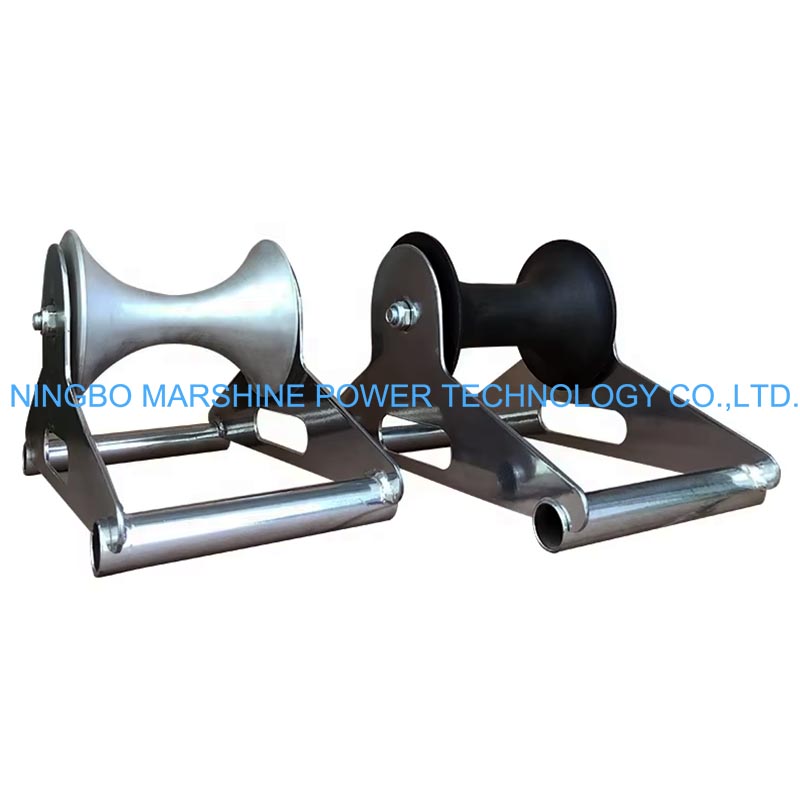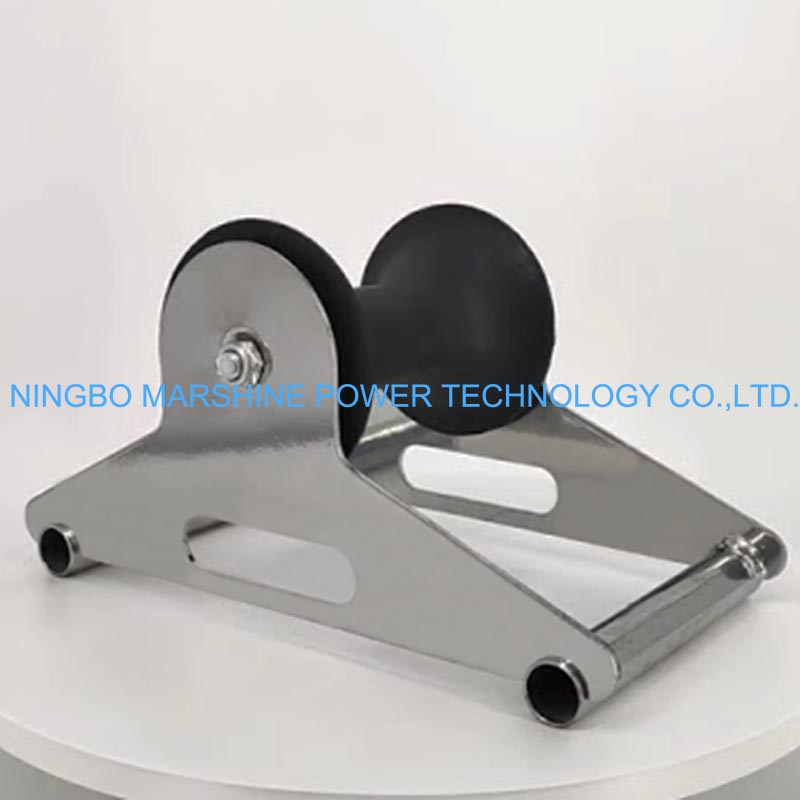
What Is MARSHINE Manhole Corner Guide Roller?
Our MARSHINE Manhole Corner Guide Alloy Steel Frame Flat Trench Roller is a manufacturer specialty tool designed to make pulling or feeding cable and conduit in a trench and manhole environment easier. Its tough alloy steel frame and unique corner guide design give support and reduce friction so you can pull cables through abrupt bends and challenging trench runs without harming them. Whether you're installing buried cable, fiber optic lines, or electrical conduit, this MARSHINE Flat Trench Roller keeps you safe and your installation rolling.
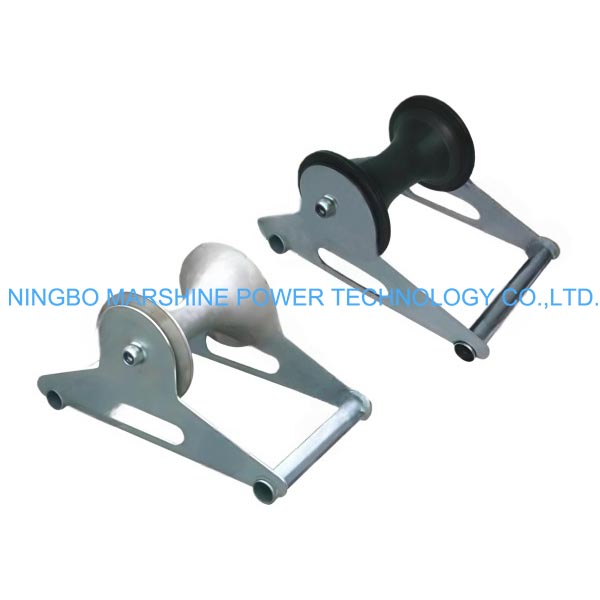
So How To Use MARSHINE Flat Trench Roller Properly?
Before The Use
Prior to setup, please be sure to take these necessary precautions to use MARSHINE Manhole Corner Guide Alloy Steel Frame Flat Trench Roller:
Check the Roller
Look over the alloy steel frame and rollers for any imperfections including cracks, rust or other damage. Make sure everything moves smoothly, and that the corner guide assembly is tight.
Choose the Proper Size
Make sure the roller is designed for the size of the cable or conduit you will be using it with. Modify the roller groove according to the diameter of your cables if needed.
Remove Obstructions from your Install Path
Locate the cable run and make sure the path is clear. Make sure that the manhole or trench is clean and smooth with no possibility of injuring the cable or conduit.
Safety Warning
You should never enter a trench or manhole without proper safety gear including gloves, goggles, and boots. Installing the Roller
After you have prepared the site and inspected the machinery, install your MARSHINE Flat Trench Roller by these steps:
Position the Roller
LIE the roller on the bottom of the trench or manhole
For optimal results, lie the roller on the bottom of the trench or manhole at which the cable will enter. Ensure its lined up with the direction of the cable path.
Align with corner or bend
For corner or sharp bend, adjust the corner guide mechanism to smoothly guide the cable or conduit along the turn with out any resistance.
Attach the Roller
Install the roller
Depending on the package type, apply any holding clamps and/or brackets supplied with the roller to hold it in place during the installation.
Test for resistance
Verify that the roller is rigid and will not deflect under the load or pull force of the cable applied while feeding it through.
Good fixing is the prerequisite for stable running and avoids misalignment.
Running the Cable Through the Roller
Now, with the roller installed, you can start running the cable or conduit through the system:
Insert the Cable Into the Roller
Pick up the cable by the handle, and drop it on to the roller. The roller cable lies straight and comfortably in the roller groove, with no bending or twisting.
Winch, cable puller
In case you want to, attach a winch, hoist, or cable puller and start pulling the cable through the roller chain assembly. Have the right tension on the cable – too tight, you could damage the cable or the roller.
Run the cable through the corner
For a corner or a bend, work the cable through with the corner guide tool. Make sure your cable follows the natural bend of your roller, never making any sudden turns that might lead to undue strain or damage.
Follow the cable’s progress
Keep an eye on the cable’s progress as it moves through the roller. Make sure you are rolling smoothly, with no bumps or hitches.