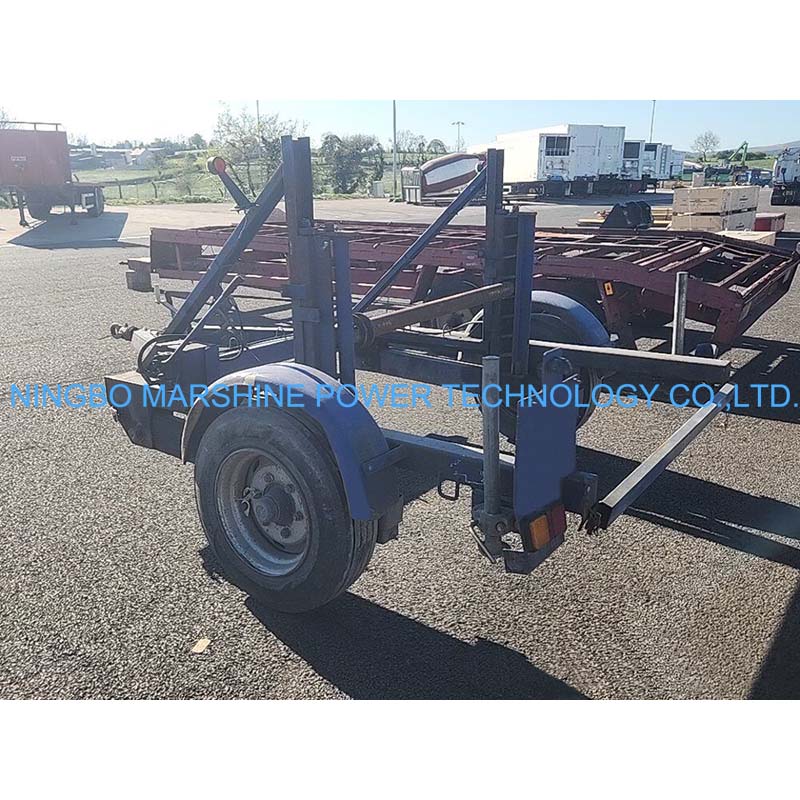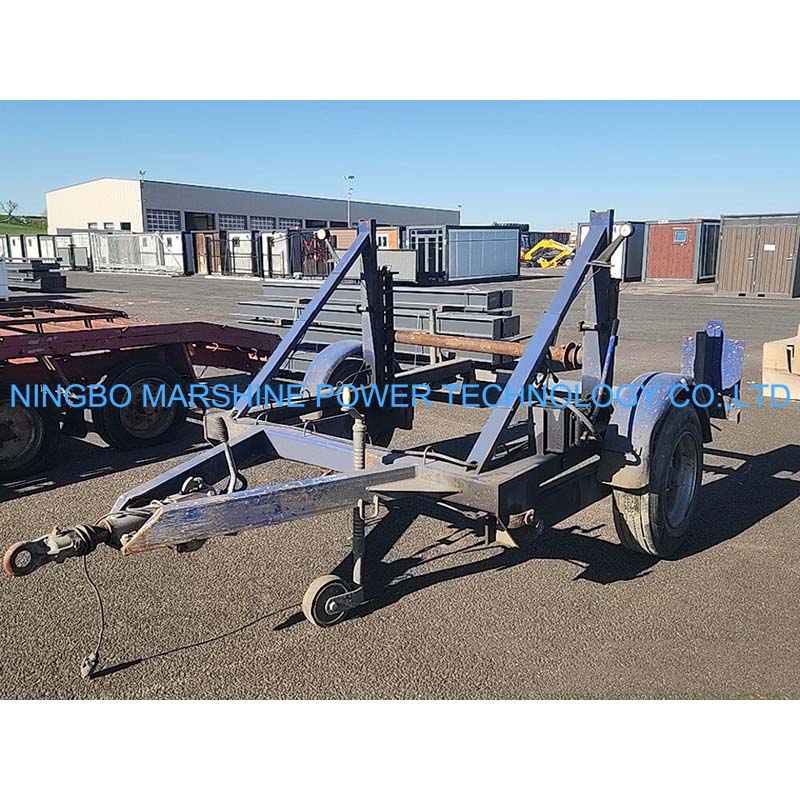
What Is MARSHINE MARPT-70 Cable Drum Trailer?
The MARSHINE MARPT-70 Single Axle Mechanical Support Cable Drum Trailer is a dependable cable handling solution designed for transporting, supporting, and dispensing cable drums during power line, telecommunications, and utility installation projects. Featuring a mechanical support lifting system and a durable single axle structure, this trailer offers stable operation, easy maintenance, and efficient cable deployment in various field environments.
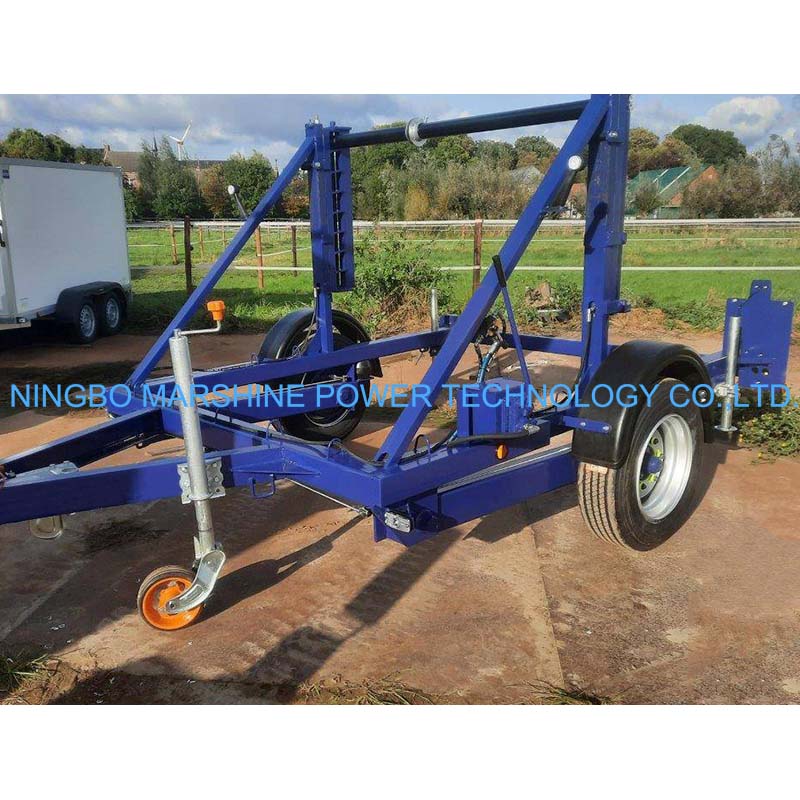
So How To Use It?
Preparation Before Use
Proper preparation ensures safe and smooth operation:
Inspect the trailer frame: Check for cracks, loose fasteners, or structural damage.
Check tires and axle: Ensure proper tire pressure and stable axle performance.
Inspect the mechanical lifting system: Verify that the winch, jack, gears, or support arms function correctly.
Check the braking system: Confirm smooth drum brake operation.
Verify drum compatibility: Ensure the cable drum size and weight are within rated capacity.
Prepare the worksite: Use level and stable ground for loading and operation.
Wear appropriate PPE: Use gloves, helmets, safety boots, and reflective clothing.
Loading the Cable Drum
Position the Trailer
Park the trailer on level ground.
Use wheel chocks to prevent unintended movement.
Raise the Mechanical Supports
Operate the mechanical lifting system using the handle, jack, or winch mechanism.
Raise the support arms to align with the cable drum shaft.
Position the Cable Drum
Move the cable drum carefully between the support arms.
Ensure the drum is centered for balanced lifting and rotation.
Insert the Drum Shaft
Pass the steel shaft of your MARSHINE MARPT-70 Single Axle Mechanical Support Cable Drum Trailer through the center hole of the cable drum.
Secure the shaft onto both support brackets.
Lift and Secure the Drum
Slowly operate the mechanical support system to lift the drum.
Ensure stable and even lifting during the process.
Lock the drum securely using retaining pins or brackets.
Transporting the Trailer
Connect the trailer securely to the towing vehicle.
Attach safety chains and lighting connectors if applicable.
Inspect hitch stability and tire condition before transport.
Drive carefully, especially on uneven or rough roads.
Avoid sudden braking and sharp turns to maintain trailer balance.
Cable Pay-Out Operation
Once positioned at the installation site:
Stabilize the trailer
Park on firm, level ground and engage wheel chocks.
Align with the cable route
Position the trailer so the cable feeds directly toward the installation path.
Adjust the drum brake
Set appropriate braking resistance to control cable payout speed.
Begin pulling the cable
Use a winch, cable puller, or manual method to draw the cable from the drum.
Maintain steady tension
Ensure smooth and controlled cable unwinding throughout the operation.
Monitor drum rotation
Watch for uneven payout, cable twisting, or excessive drum speed.