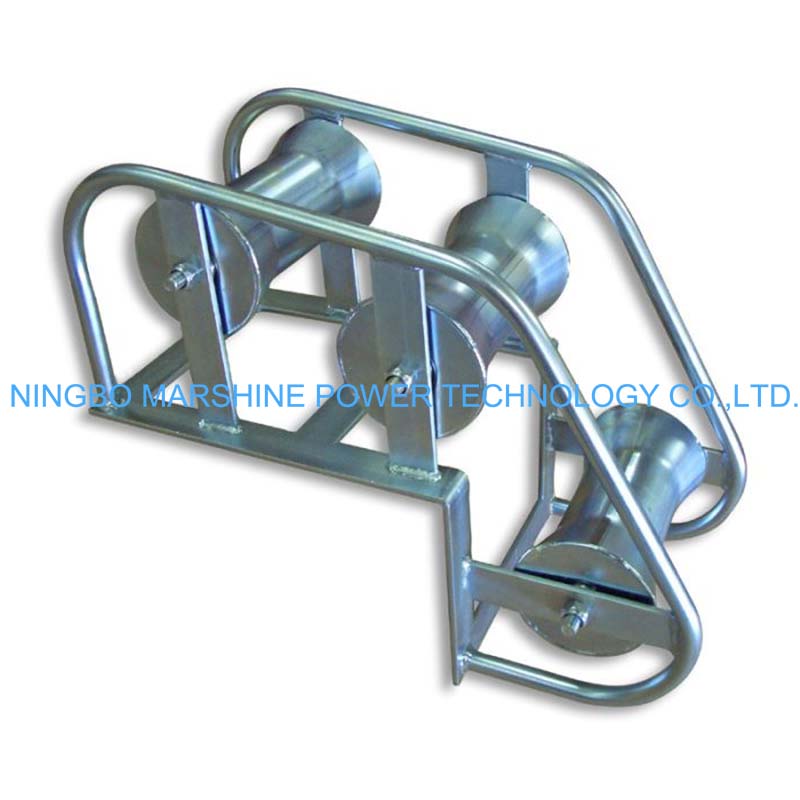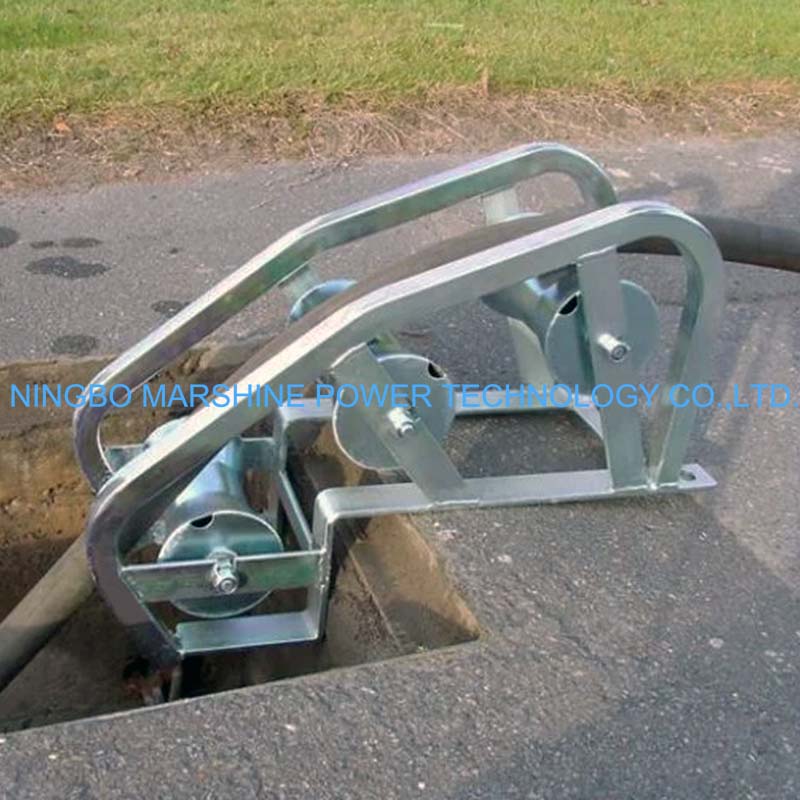
What Is MARSHINE MARML-5 Manhole Lead Roller?
The MARSHINE MARML-5 Steel Frame Aluminum Roller Manhole Lead Roller is a professional cable guiding tool designed for smooth and safe cable routing into manholes, ducts, and underground utility systems. Built with a durable steel frame and lightweight aluminum rollers, this lead roller helps reduce cable friction, protect cable insulation, and improve cable pulling efficiency during underground cable installation projects. It is widely used in power transmission, telecommunications, utility maintenance, and duct laying operations.
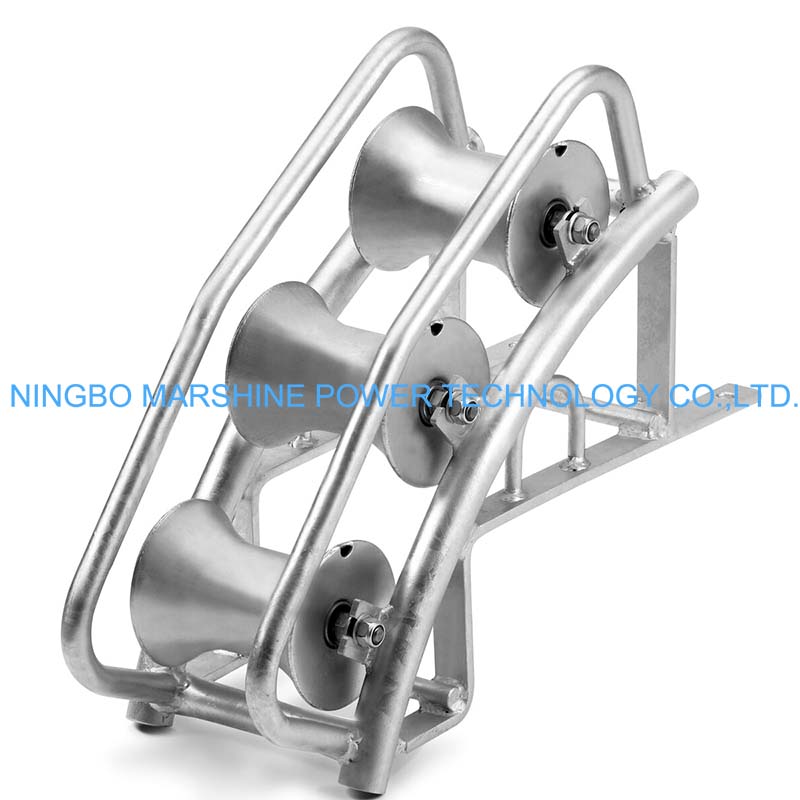
So How To Use MARML-5 Manhole Lead Roller Properly?
Preparation
Before operating this manhole lead roller, complete the following inspections and preparations:
Inspect the steel frame: Check for cracks, deformation, loose bolts, or structural damage.
Check the aluminum rollers: Ensure smooth rotation without obstruction or excessive wear.
Inspect mounting components: Verify all fasteners and support brackets are secure.
Confirm load compatibility: Ensure the cable size and pulling tension are within the roller’s rated capacity.
Prepare the worksite: Clear debris and ensure stable positioning around the manhole opening.
Place the Roller
Select the Installation Position
Identify the manhole edge or duct entrance where cable guidance is required.
Ensure the surrounding surface is stable and safe for installation.
Position the Roller
Place the roller securely at the edge of the manhole or duct opening.
Align the MARSHINE MARML-5 Steel Frame Aluminum Roller Manhole Lead Roller with the cable pulling direction for smooth cable entry.
Secure the Roller
Attach or stabilize the roller using the built-in frame support or mounting fixtures if required.
Ensure the roller remains stable during pulling operations.
Check Roller Movement
Verify that all aluminum rollers rotate freely and smoothly.
Confirm the cable path is centered to minimize friction and side loading.
Cable Pulling
Position the Cable
Carefully place the cable onto the aluminum rollers.
Ensure the cable sits securely within the guiding area.
Begin Cable Pulling
Start the pulling operation slowly to verify proper cable movement.
Observe the roller system during the initial stage of operation.
Maintain Controlled Pulling Tension
Keep consistent pulling tension throughout the installation process.
Avoid sudden jerks or excessive pulling force that could damage the cable or roller.
Monitor Roller Performance
Continuously observe roller rotation and cable alignment.
Stop operation immediately if jamming, excessive friction, or instability occurs.