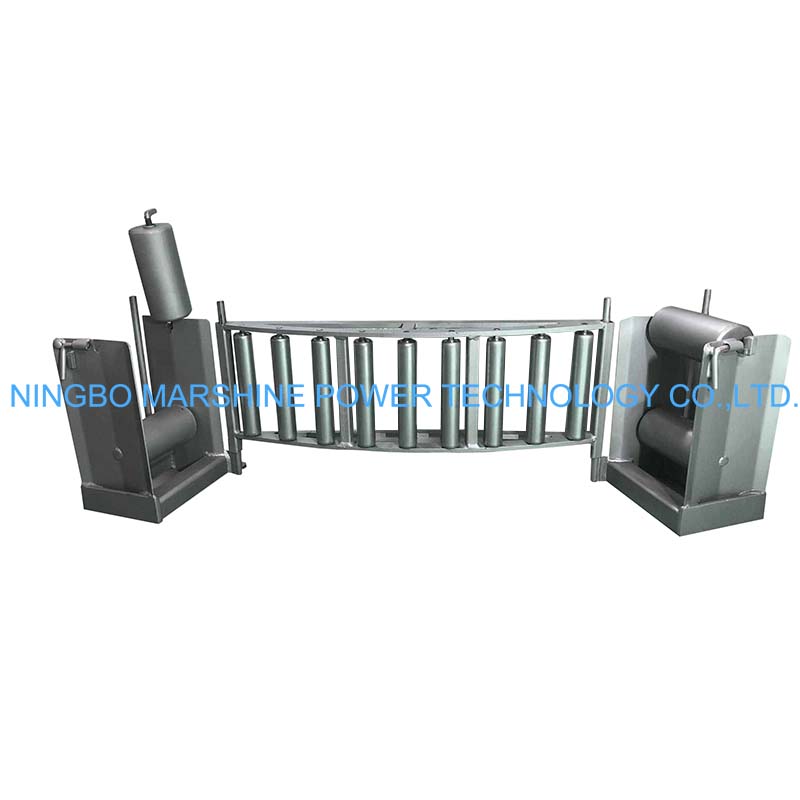
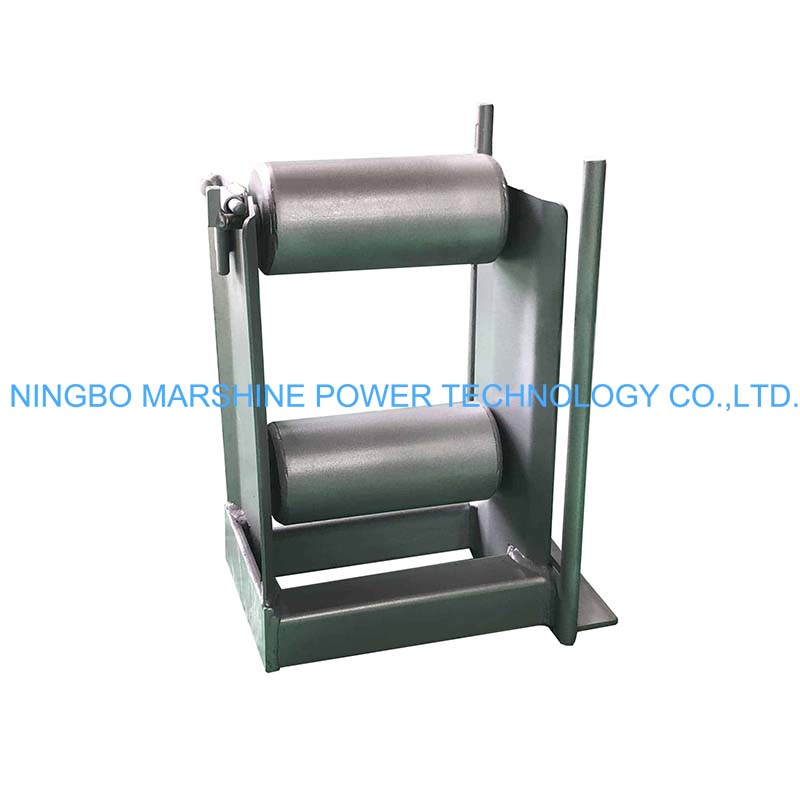
The MARSHINE MAR-BR7 Heavy Duty Alloy Steel Horizontal Corner Roller is specifically designed to guide cables safely through horizontal bends. Constructed from a heavy-duty alloy steel frame with two large horizontal rollers, it supports cables up to 130 mm in diameter while providing a 10 KN load capacity. The hinged upper roller allows quick cable placement and removal, making installation more efficient. Our MAR-BR7 roller can also be linked with compatible vertical corner rollers or skid plates to create a complete cable guidance system for complex routing applications. Comparable heavy-duty corner rollers are designed for use individually or as part of modular bend assemblies for large cable installation projects.
So How To Use It Correctly?
Inspect the Roller Before Use
Before every installation, perform a complete inspection.
Check that:
The steel frame is free from cracks or deformation.
Both rollers rotate smoothly.
The roller shafts are secure.
The hinged top roller opens and closes correctly.
Fasteners are tight.
The painted surfaces are free from severe corrosion.
Dirt or debris has been removed from the rollers.
Identify the Corner Location
The MARSHINE MAR-BR7 Heavy Duty Alloy Steel Horizontal Corner Roller is designed for locations where the cable changes direction horizontally. Place the roller so that the cable will remain centered on the rollers throughout the entire bend.
Position the Roller Correctly
Place the MAR-BR7 on stable, level ground directly at the corner.
Ensure that:
The frame sits securely.
The rollers face the cable pulling direction.
The cable path follows the center of both rollers.
The roller cannot shift during pulling.
If necessary, secure the roller using stakes, anchors, or additional supports to prevent movement under load. Proper positioning minimizes cable friction and improves pulling efficiency.
Open the Hinged Upper Roller
One of the major advantages of the MAR-BR7 is its hinged upper roller. To load the cable:
Release the upper roller.
Swing the roller open.
Position the cable inside the roller channel.
Close the upper roller.
Confirm that the locking mechanism is fully engaged.
The hinged design allows cables to be installed quickly without threading them through the entire roller assembly, reducing setup time.
Connect Multiple Rollers for Larger Bends
For sharper or more complex cable routes, a single horizontal roller may not provide enough guidance. The MARSHINE MAR-BR7 Heavy Duty Alloy Steel Horizontal Corner Roller can be combined with:
Vertical corner rollers
Additional horizontal rollers
Skid plates
Other compatible bend rollers
Linking several rollers creates a continuous cable path that reduces side pressure and minimizes cable stress through the bend. Comparable systems are designed to interconnect horizontal and vertical rollers to form complete corner assemblies.
Begin Cable Pulling
After positioning the roller:
Connect the cable to the pulling equipment.
Apply tension gradually.
Pull at a steady speed.
Keep the cable centered on the rollers.
Avoid sudden starts or stops, as these can increase cable tension and create unnecessary stress on the roller system. The large 89 mm alloy steel rollers provide smooth rotation, reducing friction and allowing the cable to move efficiently around the corner.
Monitor the Cable During Installation
Throughout the pulling operation, continuously observe:
Cable alignment
Roller rotation
Frame stability
Cable tension
Roller contact points
Continuous monitoring helps prevent cable damage and ensures smooth installation.
Release the Cable After Installation
Once the cable has passed the corner:
Stop the pulling equipment.
Confirm that cable tension has been released.
Unlock the hinged upper roller.
Lift the cable out of the roller.
Close the upper roller for transport or storage.
The quick-release hinged design allows fast removal without disconnecting the cable from the pulling system.