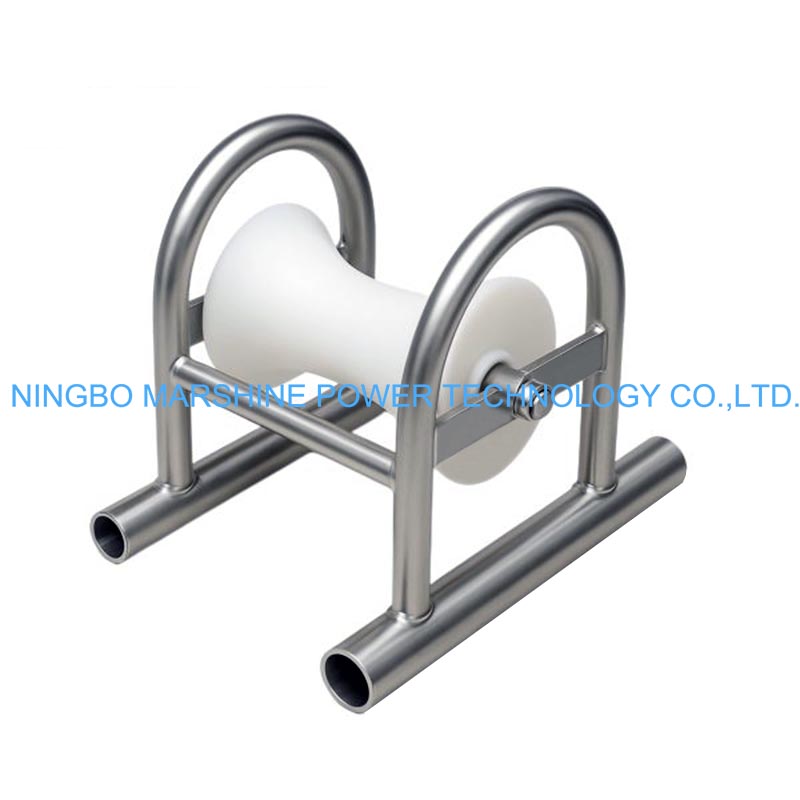
What Is MARSHINE Straight Type Pipe Mounted Cable Reel?
The MARSHINE MAR-DTM01 Straight Type Pipe-Mounted Cable Guide Roller is designed for straight-line cable routing on flat surfaces. Its stable pipe-leg frame provides excellent support while minimizing movement during operation. The roller accommodates cables up to 160 mm in diameter and features a 300 × 200 × 245 mm compact structure weighing only 4.6 kg, making it easy to transport and deploy on site. The roller can be supplied with nylon or steel rollers, allowing users to select the most suitable material for different installation environments. The fully galvanized frame offers excellent corrosion resistance for long-term outdoor use. Comparable straight-type pipe-mounted cable rollers are widely used for maintaining smooth cable movement and reducing friction on straight cable routes.
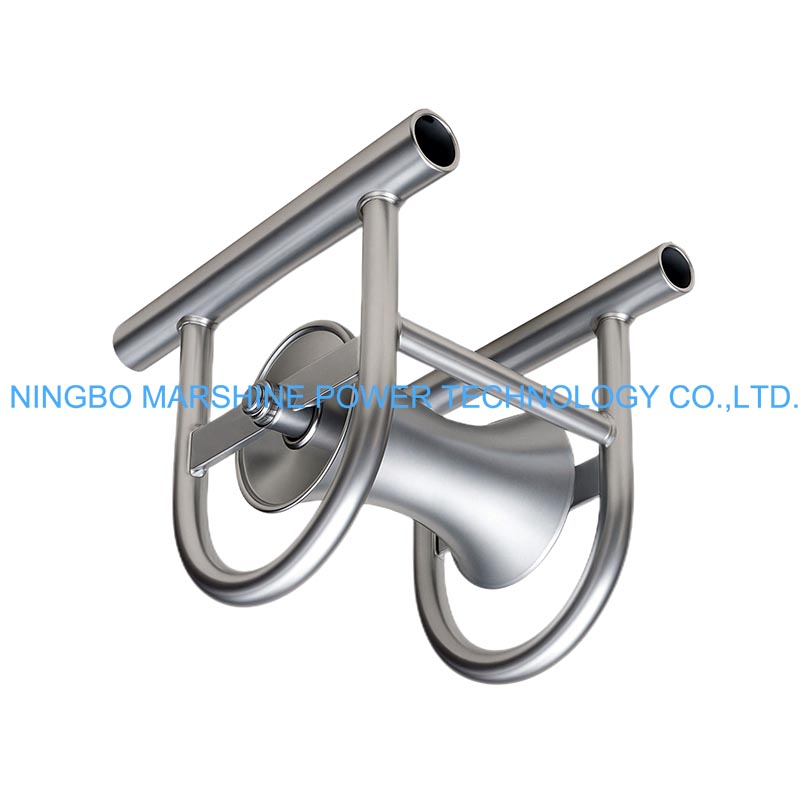
So How To Use This Roller Properly?
Inspect the Roller Before Use
Before each project, perform a complete inspection. Check the following components to ensure that the roller rotates smoothly, the frame sits evenly on the ground, and there are no cracks or deformation while dirt or debris has been removed from the roller. Routine inspection helps prevent unexpected interruptions during cable pulling:
Pipe-leg frame;
Roller surface;
Roller shaft;
Roller bearings;
Fasteners;
Galvanized coating;
Prepare the Cable Route
Before placing the rollers, inspect the installation path and remove:
Rocks.
Construction debris.
Sharp objects.
Loose materials.
Obstacles that may interfere with cable movement.
Then identify all straight sections where cable guidance is required. Proper route preparation helps reduce pulling resistance and protects the cable throughout the installation.
Position the Roller
Place the MARSHINE MAR-DTM01 Straight Type Pipe-Mounted Cable Guide Roller directly beneath the intended cable path. The roller should:
Rest on firm, level ground.
Be aligned with the cable route.
Remain stable during pulling.
Be positioned so the cable stays centered on the roller.
For long cable runs, install multiple rollers at suitable intervals to create a continuous low-friction cable path. The pipe-leg design provides excellent stability while keeping the roller elevated above uneven ground.
Position the Cable on the Roller
Lift the cable carefully and place it in the center of the roller. Before pulling begins, verify that:
The cable sits correctly on the roller.
The cable does not contact the steel frame.
The cable remains aligned with the next roller.
There is no excessive side loading.
Proper cable positioning reduces friction and allows smooth roller rotation.
Begin Cable Pulling
Connect the cable to the pulling equipment. Begin pulling slowly while maintaining:
Constant pulling speed;
Stable cable tension;
Smooth cable movement;
Avoid sudden acceleration or abrupt stops. As the cable moves, the roller rotates freely beneath it, reducing friction between the cable and the ground. This significantly lowers pulling force while helping protect the cable jacket from abrasion. Straight-type cable rollers are designed specifically to support smooth cable movement along straight installation routes while minimizing surface damage.
Monitor During Installation
Throughout the pulling operation, monitor:
Roller rotation.
Cable alignment.
Frame stability.
Cable tension.
Ground conditions.
Continuous monitoring helps ensure safe and efficient installation.
Relocate the Roller as Needed
As the cable advances, rollers behind the cable can be moved forward. To relocate:
Wait until the cable has completely passed.
Lift the lightweight 4.6 kg roller.
Position it further along the cable route.
Align it with the remaining rollers.
The compact size and lightweight construction make repositioning quick and easy, improving productivity on long cable installation projects.
Clean and Store the Roller
After completing the installation:
Remove dirt and mud from the roller.
Wipe down the galvanized frame.
Inspect the roller surface for wear.
Check that the roller rotates freely.
Store the equipment in a clean, dry location.
The fully galvanized frame resists corrosion, helping extend service life even after repeated outdoor use.